free web stats
  • Home
  • About Jessica
  • Offerings
  • Blog
  • Contact
Menu

JESSICA PIZZO BRIX

Street Address
City, State, Zip
Phone Number

Your Custom Text Here

JESSICA PIZZO BRIX

  • Home
  • About Jessica
  • Offerings
  • Blog
  • Contact

Lavender and Tea Tree Oil Spot Treatment

February 2, 2015 Jessica Pizzo

I've dealt with hormonal skin issues for most of my life. As a teenager, I spent a fair amount of time in a dermatologist's chair, being poked, prodded and prescribed both topical and internal magic pills. In turn, I also grew up with a mother who loved to pamper herself, and I learned how important it was to treat your skin gently and well.

These two aspects always seemed at odds with me. On one hand, my skin felt like it was being burned off by chemical treatments that never seemed to work, and on the other, I learned the luscious wonder of facial massage and how to generate a very good glow.

As I've aged, my skin woes have improved slightly, but I still battle unpredictable spots, breakouts and other cystic acne troubles that have led me to spend a fair amount of time experimenting to find the right balancing treatment. While I've found that many forms of hormonal and cystic acne must be evaluated on an internal basis, how you take care of your skin still really does matter.

I've moved to a very simple and holistic skincare routine overall, but when dealing with a particularly bothersome blemish, it's time to bring in nature's big guns: Tea Tree and Lavender.

Tea Tree oil is one of the most effective antibacterial and antiviral oils. It can be used to treat many external ailments and I'm constantly amazed by it's purifying capabilities. Lavender has wonderful adaptogenic and similar antibacterial and anti-fungal properties, and is a terrific cleansing and soothing essential oil.  Below is a recipe for a spot treatment that combines the two with an aloe vera and jojoba oil carrier combination to help heal and protect your skin. 

Lavender and Tea Tree Oil Spot Treatment

1 oz. jojoba oil

1 teaspoon aloe vera gel

7 drops tea tree essential oil

5 drops lavender essential oil

1 sterile glass dropper or roller-ball vial

Combine jojoba oil, aloe vera gel and essential oils in a sterile vial. Shake well to combine, and before each use. To use, apply directly on blemish on freshly washed skin, twice a day.

Note: Before using any essential oils on your skin, it's best to perform a patch test for sensitivity and potential allergic reactions. To do so, dab 1-2 small drops of the essential oil on your inner elbow when dry. If no reaction occurs within 24 hours, the oil is safe for skin use. 

In Natural Living, Lifestyle, Health and Wellness Tags Natural Skincare, Essential Oils, Kitchen Sorcery

Citrus All-Purpose Cleaner

January 26, 2015 Jessica Pizzo

When I lived in Italy, I had an extremely strange fascination with the smell of a particular dishwashing solution. I secretly relished in the smell every day and always offered to do the cleaning up after dinner, if only to be able to openly whiff the scent.

In this light, it's no surprise that I love a clean house, and one that smells good.

Since moving into our apartment, we've made it our mission to take good care of the butcher block and countertops, making our home as much of a calming space as possible. What this translates to is constant surface wipedowns, making our big weekly clean the opposite of a big deal. It also means that if I'm touching cleaning products more frequently, I'd rather it be something that I feel comfortable being around my body as on it.

Many mainstream all-purpose cleaners wade into dangerous territory with the addition of antibacterial agents that have even the FDA up in arms. Whether you're as much of a clean freak or not, it's likely that you spend some time with a towel in one hand and some type of all-purpose cleaner in the other. 

Below is my recipe for a  fresh-scented all natural all-purpose cleaner that you can whip up in five minutes flat, and use to keep your bathroom, kitchen and tables clean. White vinegar is an unbelievably effective and non-toxic all-purpose solution, and when combined with essential oils, lemon and distilled water, won't make your home smell like a salad. Use freely on wood, porcelain and glass surfaces, but steer clear when treating marble or granite as they're more porous in nature.

Citrus All-Purpose Cleaner

3 parts distilled water

1 part organic distilled white vinegar

1 tablespoon lemon juice

7-10 drops lemon essential oil

3-5 drops sweet orange essential oil

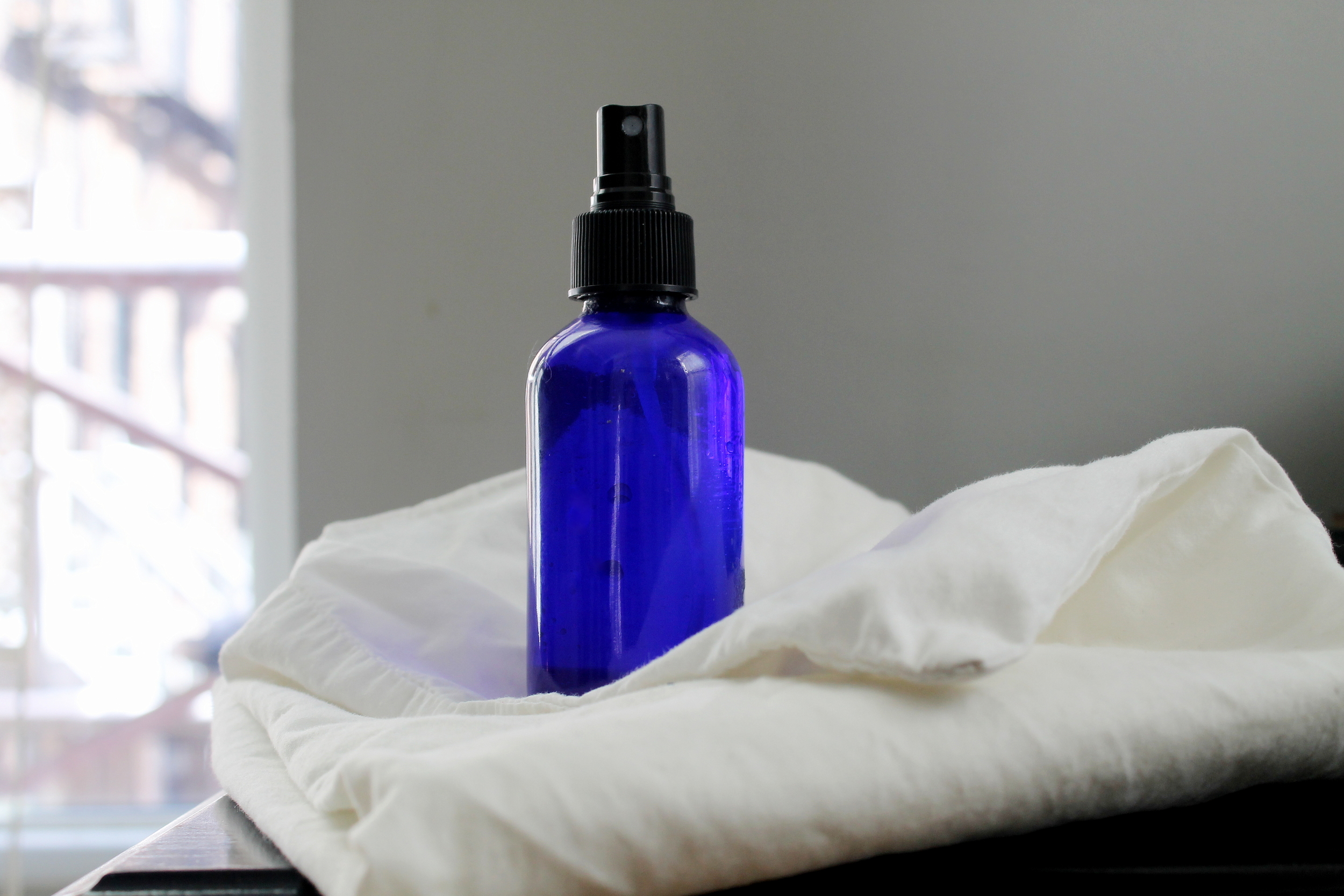
Combine all ingredients in a glass bottle with a spray top. Shake before use as ingredients may separate, spray surface and wipe down with a warm cloth.
In Natural Living, Lifestyle Tags Natural Home Products, Cleaner Living, Homemade

Activated Charcoal

January 22, 2015 Jessica Pizzo

Moving to a new city has it's perks, but it also means inheriting a new set of very old pipes.

No matter where you live, there's a good chance that your water is a bit contaminated. In general, water treatment plants work to combat any local water pollutants, but do so by adding disinfectants like chlorine and similar chemicals. While most of our days are spent drinking filtered office water, I started to search for how to make our home tap water a more palatable experience too.

Water contamination has it's own risks, at varying levels and exposures, and every town is required to mail the local annual water quality report to its citizens. If you're looking to nerd out on what's hanging out in your most privileged resource, the Environmental Working Group has a great guide on how to read your local water report and also on how to choose a water filter accordingly.

At-home water filtration options are plentiful, but not all filters are created equally. There are also some very basic options available, and even the simplest technology that is used to purify water across the world is available for the home.

In our own recent hunt for water filtering, we've selected to try a more sustainable solution: charcoal. Activated charcoal is actually a relatively primitive filtration method, and it's a form of activated carbon, which is used in most modern water filters today. What's even more lovely about these sticks is that after you're done using them, they won't end up in a landfill somewhere for the next hundred years. Instead, you can give them a second life in your garden or use as a kitchen deodorizer .

The most readily available brands of charcoal are made of responsibly harvested Japanese oak, and are renowned for their ability to remove impurities, attract chemical compounds and impart alkalizing benefits in your water. Each stick lasts around four months, and using it is as simple as opening a reusable glass bottle and filling it with water. 

If you're interested in giving this type of water filtering a try, check out Kishu Charcoal and Morihata Binchotan Charcoal.

In Natural Living, Health and Wellness Tags Water, Home, Cleaner Living
Comment

Clearing the Air

January 20, 2015 Jessica Pizzo

I've always been amazed at the ability of smell to transport you to a different place and time.

Cut open a lemon, and I'm instantly taken back to the Aeolian Islands off of Sicily, where lemons the size of footballs grew outside the house. We'd climb the trees to retrieve them en masse, and brought them home where they sat in a fragrant mountain on the kitchen table, waiting to be squeezed over fish or grilled vegetables.

Freshly cut garden roses remind me of my grandmother, who was a devotee of those saintly flowers, and how they symbolized life and growth.

And, a bundle of lavender transports me home, where my mother bought the dried herb in bulk, stuffing them in simple muslin bags and tucking them in our drawers, closets and laundry baskets.

So, it should be of little surprise that one of my favorite ways to elevate mood is with scent.

In our home, we've been diffusing essential oils using a Stadler Form diffuser. Essential oils are amazingly effective at both purifying the air and delivering relaxing notes, and there are a few concoctions in particular that I love for clean and calming tones.


Cleaning Blend

10 drops eucalyptus essential oil

5 drops tea tree essential oil

3 drops lemon essential oil

2 drops sweet orange essential oil

Calming Blend

10 drops lavender essential oil

3 drops bergamot essential oil

For each blend, mix together in a dark glass bottle, keeping these proportions constant even if increased. When ready to use, fill your diffuser to the fill line with water, and add in 3-7 drops of the essential oil blend.


In Natural Living Tags Essential Oils, Scent, Diffuser
Comment
← Newer Posts

© Jessica Pizzo Brix Coaching